Origin of Gentrification in Eliot

Board Co-Chair Wilson’s heartfelt article in the last issue encouraged me to provide more perspective on his, and our neighborhood’s, experience with gentrification.  Docks, railyards, and industries in Lower Eliot (now Lower Albina) provided jobs and Upper Albina (now Eliot’s residential area) provided housing for successions of groups seeking either, or both, refuge and a better life.  The last wave was former, mostly black, shipyard workers fleeing the Vanport flood, many of whom were welcomed into the homes of former co-workers living in N/NE Portland.  The lack of jobs and redlining stranded many of these in crowded, dilapidated homes.  These conditions were a good fit for City leaders to looking for ways to stimulate economic development through “urban renewal.”  The resulting renewal efforts and their impacts are well known; the Rose Quarter, PPS’s Blanchard Building, and Emanuel Hospital expansion.  What is less recognized is the role Portland’s comprehensive planning and zoning practices played in facilitating gentrification. 

State land use practice is controlled by Senate Bill 100 adopted in 1973 that was designed to slow urban sprawl.  SB 100 required each county to develop, implement, and maintain plans and associated zoning that accommodates expected economic and population growth within an urban growth boundary (UGB).  Industrial and residential development outside the UGB is severely limited.  The expectation then, and now, is that future growth within the UGB will require increased density; smaller lots, multi-family buildings, and in-fill development. 

Throughout the 1970s and 80s, Portland’s housing was predominately single-family, owner-occupied (roughly 65%) with the balance rental homes and apartments.  The situation in Eliot was exactly the opposite; 65% rental and 35% resident-owned but in mostly single-family homes.  Our population was equally distinct being one of the City’s most diverse and poorest.  Although counties adopted land use plans based on long-range projections of population and economic growth, there was little of either during Oregon’s recession of the 1980s.  The metro region’s population projection at the end of the recession was for an additional 1 million residents by 2040, of which Portland agreed to house at least half.  To do so, it needed to change land use plans and zoning to squeeze those people into existing neighborhoods.  Neighborhoods with a majority of homeowners naturally opposed any density increases in their neighborhoods.  Consequently, City staff looked for poor, less well connected and organized neighborhoods to dump that density.  Eliot loomed large as a target. 

Controversy over the plan to dump density in inner N/NE neighborhoods forced the City to couch this change in the Albina Community Plan, adopted in 1993.  The Plan paid lip service to the preservation of existing historic and affordable housing stock: however, the Housing Goal was to add 3,000 housing units by “increasing density … and increasing infill,” which it did by rezoning single-family lots for multifamily development.  The Plan suggested new units would be constructed on vacant and under-developed lots; however, many of those lots were (and still are) vacant because of pollution and ownership questions making it impractical to repurpose them.  Rezoning a home for potential multifamily use makes it more difficult to get a mortgage to purchase or rehabilitate a single-family home.  As a result, the Albina Plan laid the foundation for gentrification through the conversion of older, but affordable, single-family homes to multifamily developments including townhomes and apartments, and a few McMansions. 

The Plan also included an infill overlay to facilitate “granny flats,” which enabled two dwelling units on one, single-family home site.  This encouraged the further loss of single-family homes and an increase in rental apartments.  The Albina Plan was superseded by the new NE Quadrant Plan within the new Comprehensive Plan in 2016.  Active engagement by the Eliot Neighborhood Land Use Committee resulted in zoning changes that concentrate increased density along Broadway, MLK, and Williams/Vancouver along with changes to residential zoning.  This was intended to reduce pressure to demolish Eliot’s remaining, older homes.  Unfortunately, after the plan was adopted the City changed the definitions of the new residential zones increasing pressure to convert lots with single-family lots into multifamily developments.  In these days of heightened awareness of racial bias in institutional decisions, it is easy to conclude the zoning changes in Eliot were at least tainted by racism.  That is difficult to conclude because the changes hide behind “policies” rather than individual decisions.  Nevertheless, it is obvious white and wealthy neighborhoods avoided density dumping.  Regardless, the City continues to assign blame for gentrification to the developers it enabled rather than acknowledging its role in that process.  At a minimum, this reflects the City’s racial tone-deafness.  One recent example of this is its “right to return” program that encouraged black residents to return to city-supported housing in Eliot.  As several black leaders pointed out, this reinforces the public perception that Portland’s black population “belongs” in inner N/NE rather than in other, whiter neighborhoods.  Another example is the proposal to put “lids” over the expanded I-5 freeway to “reconnect” the neighborhood.  This ignores both the history of that area and its geography.  I-5 in Eliot wasn’t carved out of a former residential area, it is below a bluff that is part of the Willamette River flood plain.  In fact, as designed, the lid in Eliot will be primarily an overpass that is designed to connect truck traffic between Lower Albina and our residential areas via Hancock.  In other words, it is a benefit for the trucking industry (as is the widening project itself) not the Eliot neighborhood or its residents, past or present.  Hopefully, a new Council and the new racial awareness will finally result in policies that do not continue policies harming our community, starting with stopping the I-5 freeway expansion and, ideally, attacking vehicle pollution from the freeway and the rail and trucking industries in Lower Albina.

Testing for COVID in the Neighborhood

By Sam Wilson

Drive up Covid-19 testing by Dr. Kat onsit at Oasis of Change. Photo credit Sam Wilson

Matt Thrasher woke up one morning in early June feeling ill. He suspected food poisoning and called his boss at a bathroom surface refinishing company, where he works as a technician. The company relayed the message to Thrasher’s customer for the day, for whom he was tasked with detailing a tub and shower he had begun the day prior. Out of an abundance of caution, the clients asked that he get tested for COVID-19 before doing the work. His boss agreed, which is how he wound up parallel parked in his company truck on the 2000 block of North Williams Avenue, swirling a non-cotton swab around each of his nostrils.

Thrasher had been referred to Dr. Kat Lopez Sankey, 37, who runs a private member practice office in the basement of Oasis of Change, a community center on North Williams Avenue. Lopez began offering drive-up COVID-19 tests in early April, soon after the FDA began allowing the less invasive nasal swabs for sample collection, and still when the flatness of our curves was yet to be known. She anticipated a large demand for people looking for answers and planned on hiring employees to assist with the rush. She ordered a sign to be printed offering the service for $150, a price she settled on after weighing the many unknown factors. But the rush never came. 

Sankey began her private practice a year ago, distraught by the “insurance-industrial complex” after five years in an integrative medicine clinic. Her clients now pay $100 a month for “unlimited access” via office visits, emails, phone calls, or texts. The membership fee is out of pocket, although some insurance companies refund the cost. Her clients visit from around the Portland area, ranging from families to the elderly, but all have come by way of word of mouth. “My type of medicine doesn’t actually work very well in an insurance model,” she notes. “It’s not lucrative to spend a long thoughtful time with people with multiple follow-up calls and being accessible to them all the time. None of that is reimbursed by insurance.” 

When the coronavirus began keeping people indoors, Lopez saw less of her patients but also heard from them less as well. “I initially thought that because of the pandemic, there would be more sick people and I would be useful,” she said. “But instead, society just kind of shut down.”

It was surprising, too, that more people were not trying to get tested. Since she started offering them, Lopez has administered 13 drive-in tests to the public, all of which have been negative, and believes mixed messages have discouraged more people from getting tests. “I think there was a misunderstanding of how many swabs and tubes existed, and there was a mindset of conservation for those who were important and it was hard to know how inundated we would be,” she said. “An asymptomatic person with no exposures who’s not a healthcare worker still can’t get tested. Anywhere. Except for me or if their doctor wants to do it.” Lopez also acknowledged a Walgreens in Hillsboro began testing asymptomatic people with no exposures in late May.

As labs have become more streamlined with COVID-19 testing, Lopez has smoothed her process as well. She has settled on using LabCorp to process the tests she administers. They charge $52 per test, usually picking up the swabs within a half-hour of the sample being collected, and their results come in a few days at most. As such, Lopez has been steadily lowering her price, although the sign she had ordered at the beginning of April had only recently arrived.

As she sat in the sunny garden adjacent to Oasis of Change in early June, Lopez reflected that she should be doing the test for free, with insurance. Without insurance, the LabCorp fee would still need to be covered by the person getting tested. She had, after all, an abundance of swabs and sterile tubes, just waiting for samples. “It’s very rewarding. People are really emotional about it,” Lopez said of the peace of mind she sees when someone does a test. 

For Matt Thrasher, it was a simple process he was more than glad to do. “Look, we’re going through a pandemic. I feel like more people should get this done,” he said. Three days after Thrasher handed his swab to Lopez from his truck window, he got an email with his results. Negative.

To schedule a test with Dr. Kat Lopez Sankey, visit covidtestpdx.com.

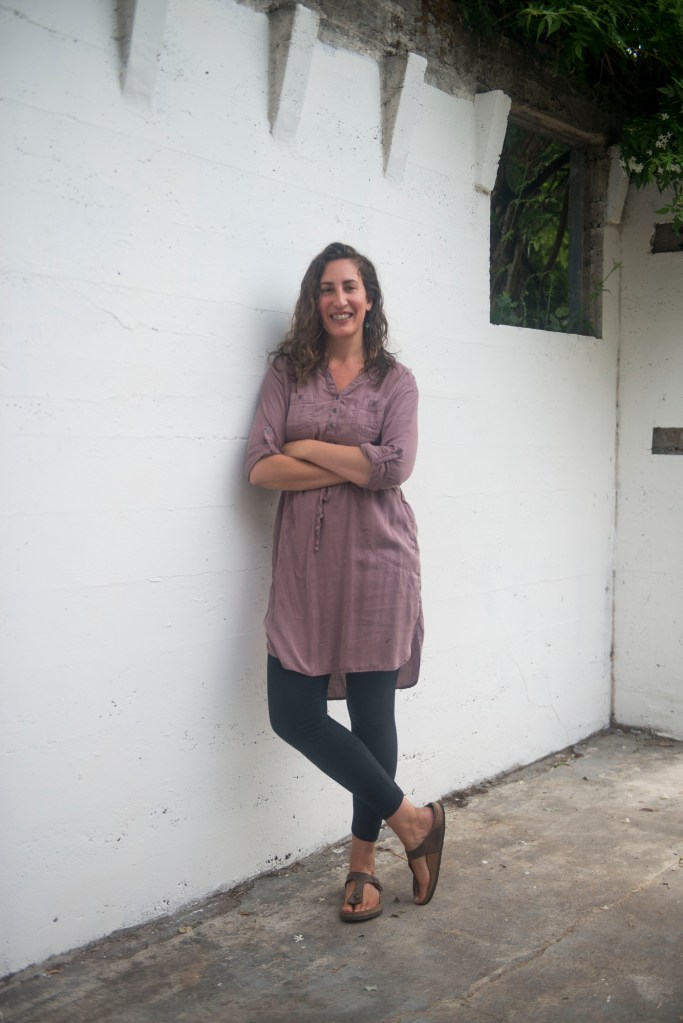
Dr. Kat Lopez Sankey who offers Covid-19 testing at Oasis of Change. Photo credit Sam Wilson

Albina Library Moves Back to Eliot Neighborhood

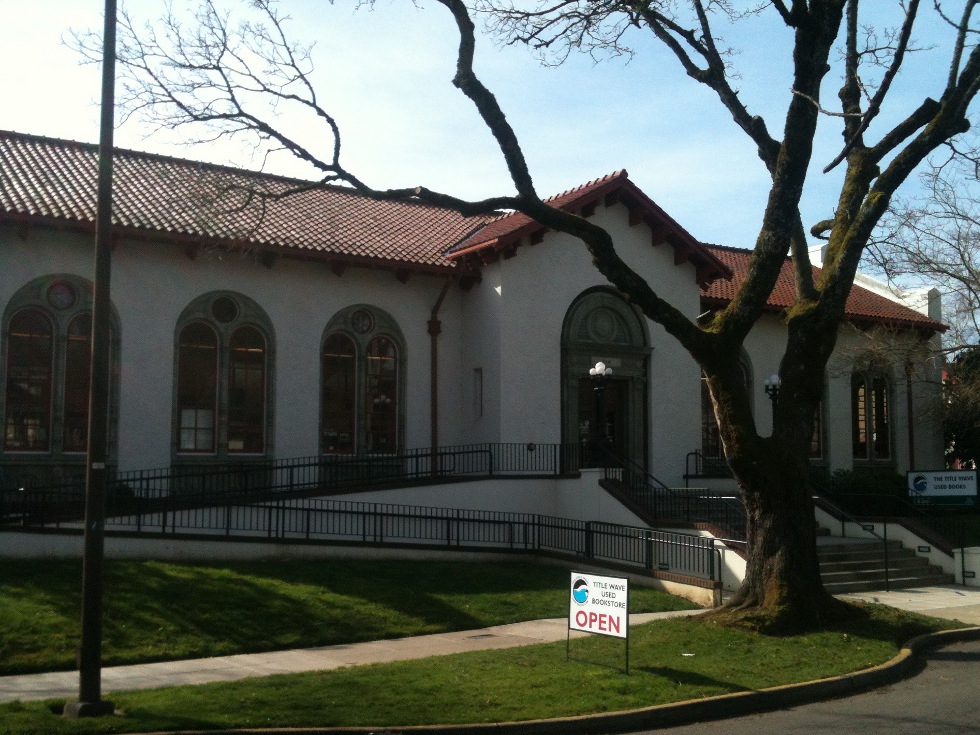
Multnomah County Library has declined to renew the lease for the current Albina Library location at 3605 NE 15th Ave. On July 1, the library will relocate back to its former location at 216 NE Knott St into a larger, historic Carnegie library building that currently serves as Title Wave Used Bookstore.

Title Wave Bookstore where the Albina library will relocate back to. This was the original location for this library branch.

This is unexpected and due to be a loss to many who have relied on the library in its current location. However, Eliot residents will probably be happy to have the library return to our neighborhood.  Relocating any neighborhood’s library was not a decision that the Multnomah County Library staff took lightly. As Vailey Oehlke, Director of Libraries, stated in her letter to library patrons recently, “A variety of factors contributed to our decision, including this pandemic, which has caused us to make difficult choices and think in new ways about how the library can serve the community.”

Albina Library is the smallest branch in the Multnomah County Library system. Its current location is just 3,500 square feet. It doesn’t even have a public meeting room. The small space would not accommodate  physical distancing which may be a necessary precaution for the foreseeable future. Therefore it would be likely that the space would allow only sidewalk service. However, the new location on Knott Street is about 2,000 square feet larger.

“The library’s lease of Albina Library expires on June 1, 2020. A three-year renewal would cost more than $260,000. As a steward of public resources, the library can’t justify that expenditure, when a suitable and larger option exists nearby that is already owned by the library,” stated Oehlke.

The new library will be 1.1 miles closer and easily accessible to both Eliot residents as well as not to far from the residents that were used to the Fremont and NE 15th Avenue location. The staff is working hard on getting the inventory relocated. If you have an item currently on hold at Albina Library the library will notify you about holds and pickups.

For information about the phased reopening plan, an FAQ and instructions for using the holds pickup service at other locations, please visit multcolib.org/covid19.

Cartside: New food cart pod in Eliot on N Williams

By Monique Gaskins

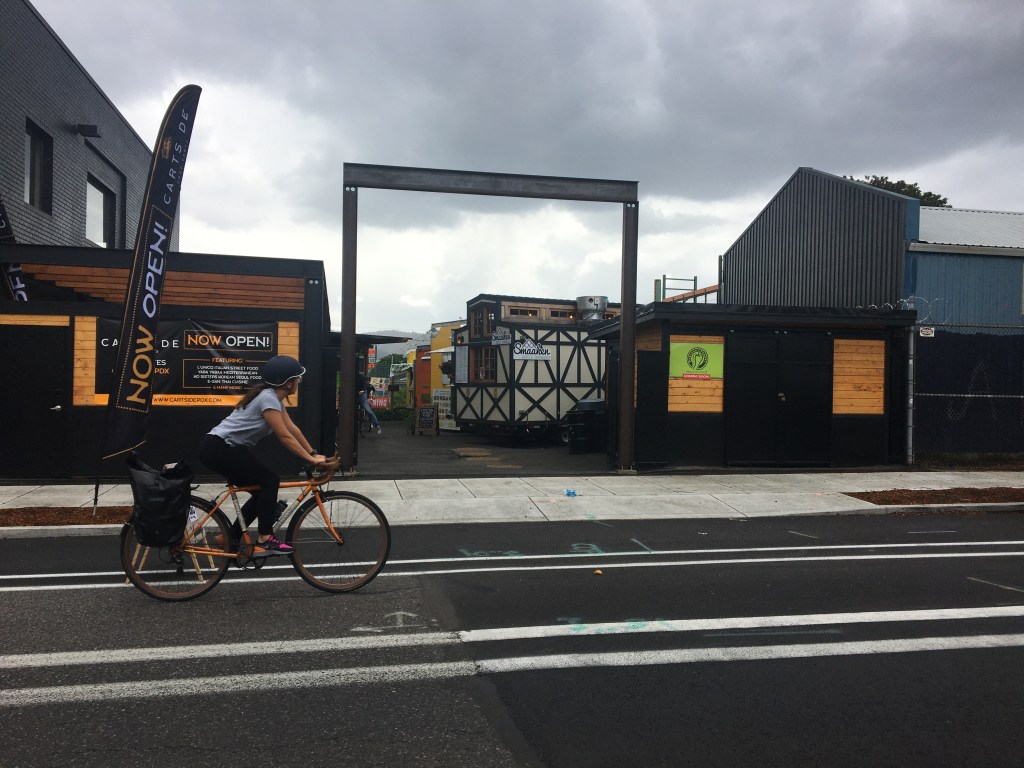
Lots of options at Cartside the new food cart pod on N Williams at NE Hancock. Photo credit Sue Stringer

We have a new local food option available in Eliot. The varied purveyors at Cartside, a new food cart pod started serving customers in Mid-May.

The site includes space for at least seven food trucks and a tap house with indoor seating and WiFi. Located at 1825 North Williams Avenue at NE Hancock Street, this is a convenient option for Eliot residents, especially if you find yourself working from home more than usual.

Not all of the carts are open yet, but in the current environment, it’s encouraging to hear about small businesses opening in the neighborhood. With warmer weather coming to Portland, consider walking over to Cartside and trying out a new entree. 

Check out http://www.cartsidepdx for more information on carts, their websites and other information.

Care to share?

We have been experiencing some challenging times with both the coronavirus pandemic, the subsequent economic impact and also the Black Lives Matter protests. We are currently collecting content for our fall issue of the Eliot News. Do you have a personal experience with the coronavirus?Or perhaps a story from the Black Lives Matter protests you’d like to share? How you or your family handling the pandemic? Any silver linings or new routines or skills you’ve discovered? Please share with us by emailing to news@eliotneighborhood.org. We’ll follow up with any questions or clarifications. Thank you~ Sue Stringer, Editor, Eliot News

Change Now

By Jimmy Wilson

I commend Chief Jami Resch who knew deep down in her heart and soul that in these times, she wasn’t the right fit for the job. That took courage and will power coming from a white person in a high office to choose a black man who deserved it. This needs to happen all over the country from the top legislation, congress, and the senate. This is what the black community needs to see now. For example, legislation needs to work for the interest of the people and not the special interest of the lobbyist.  

We as the people of color need change to supersede the Portland Police Bureau union contract and local policies by using tools like Civil Rights and Civil Liberties instead of using the word willful by replacing it with words like standards and reckless.  

We also need the Police to wear body cameras at all times.  Black people need infrastructures such as education, administration, reparation, jobs, justice, and inclusions to eliminate racial disparities. The two hundred forty-six million dollars that is allocated for the Portland Police Bureau for the year 2020 – 2021 proposed budget should be decided by including black people seated around the table.  

Do you burn wood in Multnomah County? Survey responses needed by 7/13/20

Multnomah County Office of Sustainability has asked the Eliot Neighborhood Association to share this message:

Multnomah County’s Office of Sustainability has received a DEQ grant to implement a community campaign about health and wood smoke. The goal of the campaign is to promote clean air and reduce wood smoke in the county. 

They are in the early stages of brainstorming and would appreciate feedback about wood burning. 

If you burn wood, this 10 minute survey will help inform our 2020-2021 Wood Smoke Campaign. Please fill out by midnight Monday, July 13th for a chance to win one of four $25 Fred Meyer gift cards. 

Please reach out to sustainability@multco.us with any questions or concerns. Thank you!

Randall Children’s Hospital nationally recognized for excellence in surgery

By Kristin Whitney

The American College of Surgeons (ACS) has verified Randall Children’s Hospital at Legacy Emanuel as a Level 1 Children’s Surgery Center, making it one of two children’s surgical centers in Oregon to earn this prestigious validation.  

The Level 1 surgical verification was awarded because of Randall Children’s high-quality pediatric-specific surgical services, multidisciplinary team of world-class pediatric specialists and holistic approach to children’s surgery. Previously, Randall Children’s was the first hospital in Oregon and the first children’s hospital in the Pacific Northwest to receive the Level 1 pediatric trauma center verification by American College of Surgeons in 2017. 

“From the beginning, Randall Children’s Hospital was built with the needs of children and families in mind,” said Bronwyn Houston, president of Randall Children’s Hospital. “Randall Children’s treats over 100,000 children a year, and this achievement in pediatric surgery highlights the hospital’s expertise in providing the highest level of comprehensive care possible for every child.”

Randall Children’s is one of 21 surgical centers in the nation to achieve this elite verification from the American College of Surgeons. The process is rigorous, requiring surgical centers to meet essential criteria for staffing, training, and facility infrastructure and protocols for children’s care.

“Kids have unique physical and emotional needs,” said Cindy Gingalewski, M.D., medical director of children’s surgical services. “If your child requires surgery, you want to know that at every step of the way they are being treated by leading pediatric specialists who are committed to providing the highest quality care tailored for children.”

Some requirements and attributes of an ACS-CSV-verified pediatric surgical program include:

  • Pediatric-trained specialists including surgeons, anesthesiologists, nurses, radiologists and intensivists who are available to care for children 24 hours a day, seven days a week.
  • Children’s specialty surgeons in pediatric orthopedic surgery, pediatric neurosurgery, congenital heart surgery, pediatric plastic surgery, pediatric ophthalmology, pediatric otolaryngology and pediatric urology are required in Level 1 children’s surgical centers.  
  • Dedicated resources to take care of the most complex pediatric conditions.
  • Providing leadership in education to families, community pediatricians, and emergency personnel.
  • Participation in a national data registry that yields semiannual reports of quality for processes and outcomes and identifies opportunities for continuous quality improvements.
  • A robust research program that brings evidence-based science into clinical practice at the bedside.

Randall Children’s participates in ongoing performance improvement efforts to ensure each patient experiences the best possible surgical outcome from the emergency department to the inpatient rehabilitation program. Throughout the Pacific Northwest, Randall Children’s is known for its excellent communication with referring pediatricians and families.

The American College of Surgeons is a scientific and educational association of surgeons that was founded in 1913 to improve the quality of care for the surgical patient by setting high standards for surgical education and practice. Longstanding achievements have placed the ACS in the forefront of American surgery and have made it an important advocate for all surgical patients.

About Legacy Health

Legacy Health is a locally owned, nonprofit health system driven by our mission to improve the health of those around us. We offer a unique blend of health services – from wellness and urgent care to dedicated children’s care and advanced medical centers – to care for patients of all ages when and where they need us across the Portland/Vancouver metro area and mid-Willamette Valley. With an eye toward a healthier community, our partnerships tackle vital issues such as housing and mental health. Legacy strives to help everyone live healthier and better lives, with the vision of being essential to the health of the region. For more information, visit www.legacyhealth.org.

Are you ready for the Big One? Earthquake Tech to the rescue!

Steve Gemmell, the owner of Earthquake Tech, unexpectedly learned about seismic retrofitting 20 years ago. After getting out of college and living life as a ski bum in Colorado for a year, he was painting and refurbishing houses and ended up getting his contractor’s license. He bought his first fixer home in Portland in 1995 which was happened to be a real fixer-upper. Steve’s dad was familiar with the Cascadia Subduction Zone and suggested he get earthquake insurance. State Farm Insurance issued the policy with no questions asked. 

Fast forward to 1999 when Steve went to buy his second home and again approached State Farm to write the earthquake policy. They asked if the house was bolted down to the foundation.  Not familiar with the process, he talked to an engineer who explained to him how to make the right connections for the house. He bolted that house down to its foundation and was able qualify for the insurance policy.  An idea for a business was born… So why specialize in the retrofitting business? Steve says, “Seismic retrofitting requires way less trips to the hardware store compared to other construction/remodeling projects. I know exactly what I need and have all supplies at the ready which makes for a very efficient job.”

Seeing the importance of spreading the word for seismic reinforcement, Steve marketed his business to State Farm and the agents, in turn, would refer their insurance customers to Steve. Twenty years later, Earthquake Tech still markets to all insurance companies, home inspectors, real estate agents, and business associations, as well as offering continuing education to all those business segments and their agents.

“Earthquake Tech specializes in residential and commercial seismic retrofitting. We also run a group out of our headquarters called the Portland Resiliency Plan, a community effort bringing the message of preparedness to all walks of life and age groups in the city of Portland,” says Steve. Besides seismic retrofitting, Earthquake Tech offers many other services including full commercial and residential seismic upgrades, installation of basement staircases, egress windows and doors, staircase doors, and emergency gas shut off valves.

Earthquake Tech has recently purchased the building at 2310 N Kerby Ave just off N Russell Street and will host events here soon. Future events planned are Earthquake Tech sponsored talks by Steven Eberlein from Tipping Point Resilience on the Cascadia Subduction and earthquake preparedness. The Portland Resiliency Plan will also offer a program for business owners about creating resiliency plans/emergency plans after an earthquake, ice storm, etc.

 Many homeowners are seeing the value of retrofitting their homes and more businesses are also seeing the benefit because of the liability if an earthquake would cause damage and injury in an unreinforced building. So if you are concerned about the safety and resiliency of your home or building, want to talk about preparing your home or business for safety, or have questions about what steps to take, Earthquake Tech is the company to contact with their 20 years of experience. Check out their website for helpful information and tips, email for more information, or give them a call – the safety of your future may depend on it.

Earthquake Tech

2310 N Kerby Ave

503-282-4424 

Earthquaketech.com

contact@earthquaketech.com

Eliot Neighborhood Welcomes New Veterinary Practice

By Alex Simpson

In January 2020,  Grateful Heart Veterinary Hospital started providing North and Northeast Portland with the highest quality, compassionate, and cutting-edge veterinary care.  Dr Katy Felton and her team opened a small animal practice at 3334 North Vancouver Ave. There is a rear entrance and ample parking at 107 N. Cook St, Suite B, right across from New Seasons and Mud Bay stores.

Dr. Felton’s focus is on comprehensive whole-life care of cats and dogs.  With over 13 years in practice, including her role as Medical Director of a thriving Portland clinic, Dr. Felton practices caring, high-touch, and customized medical care.She loves surgery and dentistry, and is a certified canine rehabilitation practitioner, bringing her care of seniors, athletes and pets recovering from procedures to a new level. She is bringing Portland’s best certified team of vet care professionals with her to North Portland. The entire staff is Fear Free Certified, dedicated to making veterinary visits as low stress as possible for pets and their families.

Stop by the clinic in January, visit our website at www.gratefulheartvethospital.com, or call us at 503-813-2050 to meet our team, see our vision, and share in the best veterinary experience possible.  We think anyone who loves their pets as much as we do will enjoy the gorgeous space, culture, and phenomenal care we’re bringing to North Portland and the Eliot neighborhood.

Help Your Community: Work for the U.S. Census Bureau!

By Scott P Moshier, Census Bureau

The U.S. Census Bureau is currently hiring for the 2020 Census. The positions are temporary and flexible with varying pay ranges. For Census Takers in Multnomah and Clackamas counties, the pay starts at $18.00/hour.

By working for the Census Bureau, our community has a special opportunity to help make the 2020 Census an accurate and complete count. There are so many reasons our nation needs to be counted completely and accurately. The count happens every 10 years with the decennial census, which influences how more than $675 billion from more than 100 federal programs are distributed to states and localities each year. Here’s some of what the census numbers effect:

  • Medicaid.
  • School lunch programs.
  • Community development grants.
  • Road and school construction.
  • Medical services.
  • Business locations.

If you’re interested in a job, please visit the Census Bureau job site to apply. You’ll also be able to see descriptions and frequently asked questions at 2020census.gov/jobs.

We’re also encouraging everyone to self-respond to the 2020 Census Questionnaire at 2020census.gov, by phone at 844-330-2020, or by mailing in the paper questionnaire they received in the mail.

Condensed version in Spanish:

¡Usted puede ayudar a su comunidad! Solicite un empleo temporal con el Censo del 2020. Los resultados del Censo ayudan a determinar el número de representantes de cada estado en el Congreso, así como la manera en la que se usan fondos para escuelas, hospitales y carret-eras. Complete una solicitud de empleo por Internet en 2020census.gov/jobs.

Oasis of Change- Response to Coronavirus

By Dov Judd

I hope everyone is staying safe and finding constructive ways to keep occupied and connect with those around you. We at Oasis of Change miss seeing everyone around especially as the spring is starting and the farm is coming to life. Eating meals on the farm with no community around is just not the same.

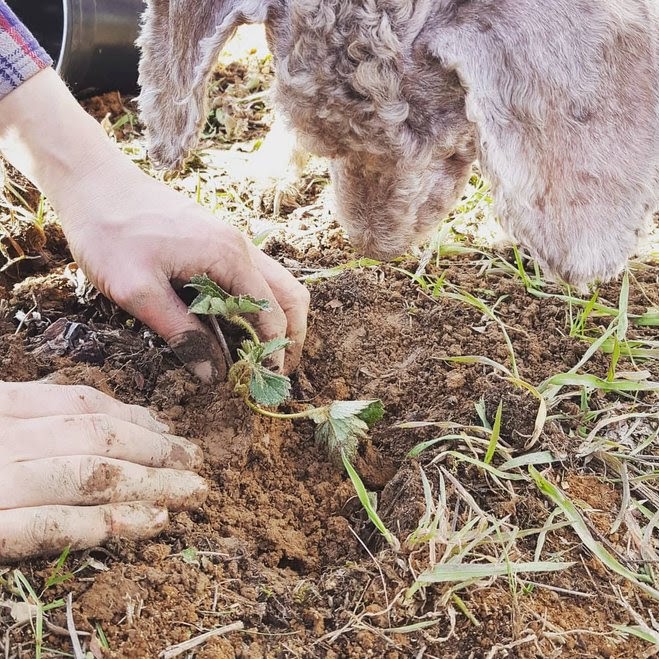
Some welcome relief from staying at home – planting starwberries at Oasis of Change. Photo credit Dov Judd

We have been thinking hard about how we can help the community in this time and so far we have come up with a couple special ideas. We have been so saddened to see how empty it has gotten and our mission is to create community so we are going to try to start inviting people back in safe ways. We are opening up our garden and farm space to the public as a community coffee and tea hangout. We have partnered with Karma Cup, a really amazing organization who is working to end homelessness.  We have so much beautiful outdoor space we might as well share it and the benefit of being outdoors is that the sun actually disinfects! 

We just finished re-doing the garden space to allow us to have all the distance we need. We can accommodate up to 6 people per group and we have 10 private outdoor seating spaces all separated by a beautiful farm. So, come relax and see everything coming to life and feel some normalcy in this time. It is recommended that you call ahead to reserve. We are also opening up our outdoor gym and trampoline to families and individuals who miss working out all you have to do is reach out and book a 30 minute to hour time slot. So if you’re feeling stuck and want a little breath of normalcy in your life come out and have a cup of coffee.

1. We launched Oasis of Change online which will hopefully give you something to laugh at and you might even learn some cooking tips.  The link is https://www.youtube.com/channel/UCp_2HabSRwCzlvnThpsKwzQ/ please feel free to share. 

2. Dr. Kat is opening up a covid-19 drive through no contact testing program here. The link to more information and to sign up is http://www.drkatlopez.com/covidtestpdx

3. We are keeping the farm space semi-open as we can all keep distance and get our hands in the dirt. Contact us directly if you would like to get dirty with us, 301-467-8441

Land Use and Climate Change

Climate change has been top of mind a lot for me recently. I used to think that individual consumption choices could help make a change, but recently I’ve adapted more of the mindset that we need to advocate for systemic changes that enable people to lead more sustainable lives and help make sustainable choices the default. Luckily, the city has been pushing for some land use and transportation policies recently that will help achieve more sustainable outcomes.

I’m personally excited about the Residential Infill Project. I will admit that it has flaws, but I think the positives far outweigh the negatives. At a high level, it ends the ban of building 2, 3, and 4 plexes in single family zoned lots. By allowing for the construction of higher density living arrangements, heating will be more efficient (less energy usage!), and transit, walking, and bicycling for daily errands become more viable (less fossil fuel consumption!). Another benefit is that the requirement for off-street parking is removed which will hopefully lead to more tree coverage as there will be fewer driveways and more space for trees. The city’s own analysis also showed that this proposal would decrease displacement in Eliot which is a huge win for the neighborhood.

Another policy proposal the city has recently put forth is the Rose Lane Project. The aim with this proposal is to get busses out of car traffic on the most utilized routes. By helping the bus move more quickly, we’ll be helping move people more quickly and we’ll make taking the bus a more viable alternative to driving for more people. The more people who choose taking the bus over driving leads to less emissions. This project will also benefit Eliot as some of the busses to be prioritized are the 6 on MLK and the 4/44 on Vancouver/Williams.

It’s an exciting time to be involved right now as a lot is changing and there are some projects that make me feel optimistic which can be hard to come by right now. If this kind of thing sounds interesting to you, we’d love for you to come to our Eliot Neighborhood Land Use and Transportation Committee meetings on the second Monday of the month at 7pm at St Philip the Deacon.

Land Use and Climate Change

By Brad Baker, LUTC Chair

Climate change has been top of mind a lot for me recently. I used to think that individual consumption choices could help make a change, but recently I’ve adapted more of the mindset that we need to advocate for systemic changes that enable people to lead more sustainable lives and help make sustainable choices the default. Luckily, the city has been pushing for some land use and transportation policies recently that will help achieve more sustainable outcomes.

I’m personally excited about the Residential Infill Project. I will admit that it has flaws, but I think the positives far outweigh the negatives. At a high level, it ends the ban of building 2, 3, and 4 plexes in single family zoned lots. By allowing for the construction of higher density living arrangements, heating will be more efficient (less energy usage!), and transit, walking, and bicycling for daily errands become more viable (less fossil fuel consumption!). Another benefit is that the requirement for off-street parking is removed which will hopefully lead to more tree coverage as there will be fewer driveways and more space for trees. The city’s own analysis also showed that this proposal would decrease displacement in Eliot which is a huge win for the neighborhood.

Another policy proposal the city has recently put forth is the Rose Lane Project. The aim with this proposal is to get busses out of car traffic on the most utilized routes. By helping the bus move more quickly, we’ll be helping move people more quickly and we’ll make taking the bus a more viable alternative to driving for more people. The more people who choose taking the bus over driving leads to less emissions. This project will also benefit Eliot as some of the busses to be prioritized are the 6 on MLK and the 4/44 on Vancouver/Williams.

It’s an exciting time to be involved right now as a lot is changing and there are some projects that make me feel optimistic which can be hard to come by right now. If this kind of thing sounds interesting to you, we’d love for you to come to our Eliot Neighborhood Land Use and Transportation Committee meetings on the second Monday of the month at 7pm at St Philip the Deacon.

Introducing the Eliot Business District!

By Corey Kaster

I am Corey Kaster, with Insurance Masters NW (directly behind the Nike Factory Store), and want to share with you an exciting transformation coming to the Eliot Neighborhood! 

The present state of the neighborhood with graffiti, crime, and litter doesn’t work. Business owners and residents have been taking the only action they know how and adding lighting, fencing, cameras, etc. While this may be somewhat effective, it also hasn’t made the neighborhood feel like a better place to live/work. 

Not only are things bad, but without action I foresee them getting worse resulting in more incidents, disconnection, fear, and reactionary actions. 

I envision a new future…. one where there is a vibrant, connected, and engaged business community that is a powerful force in transforming our neighborhood into something currently unimaginable. Imagine spotless streets, connected business owners that powerfully engage with the Neighborhood Association and Sustainable Eliot, and a neighborhood we are excited to live and work in with a sense pride! 

If you have a business in the neighborhood and are inspired by this future please email me to connect at corey@im-nw.com.


The new Eliot Business District Facebook Group that can be accessed here to build this community is at this link – eliot.im-nw.com