

This month, ODOT issued a press release claiming the agency intends to start construction in the summer of 2025 on the proposed Rose Quarter Freeway Expansion Project despite ODOT only possessing 40% of the needed funding for the entire project and numerous legal hurdles in their way. The press release is designed to give this project as currently designed an air of inevitability, with ODOT issuing statements like “The I-5 Rose Quarter Improvement Project was created by the local community, City of Portland and ODOT working together to plan for changes coming in the future of inner north and northeast Portland. By building new separated bike lanes and wider sidewalks, improving the highway and creating new roadway connections, the project will create a better connected community, a more reliable I-5 and support economic growth.” (ODOT press release, 2018).
In a presentation to the Oregon Transportation Commission (OTC) this month, ODOT admitted that with their current available funding, they are limiting the scope of the project. Their ‘phase one’ would be minimal changes from the current I-5 travel patterns, but they would almost entirely to double the width of I-5. They hope additional funding arrives from the 2025 legislature to build the community components desired by the Eliot Neighborhood and others, but there is no guarantee that funding for these elements will be delivered any time soon (or ever).
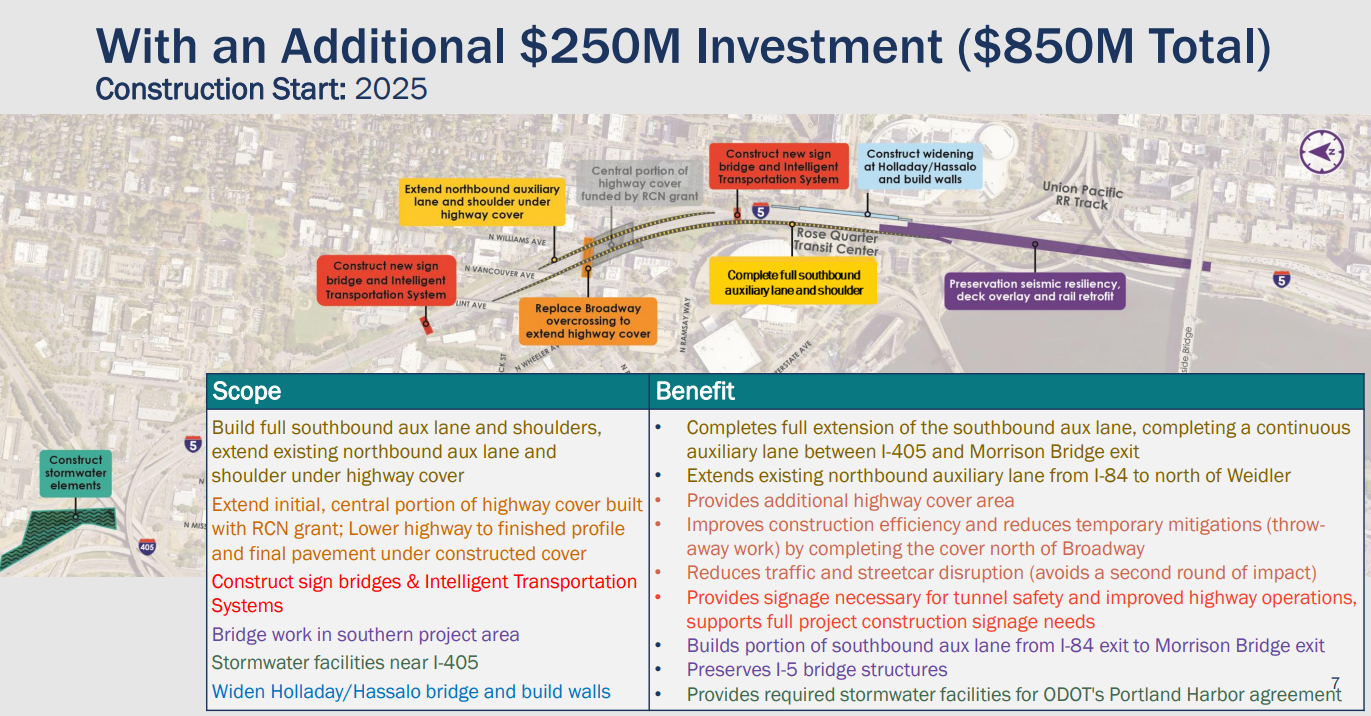
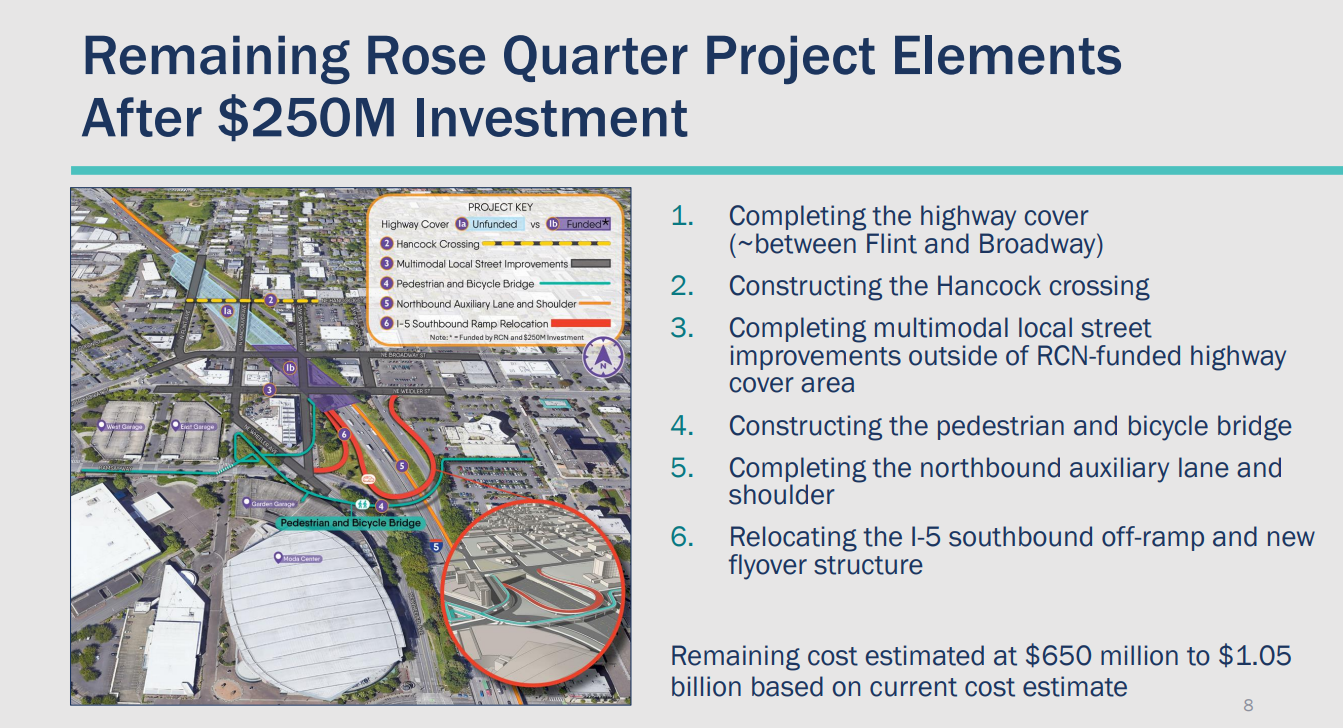
Let’s be clear – thanks to the advocacy of Albina Vision Trust and other local partners to win a historic $450 million grant from the federal government, ODOT already has enough funding to build the caps over the freeway without the expansion. But ODOT is cynically spending this money upfront on their freeway expansion plans with the intent to beg for an additional influx of hundreds of millions of dollars in the upcoming 2025 legislative session, a tall order considering the legislature’s need to prioritize finding billions of new dollars of revenue to invest in basic maintenance and preservation of ODOT’s existing deteriorating roads statewide. This prioritization of investment in freeway capacity over the highway caps at a time in which the state legislature is clearly not capable of promising this additional influx of revenue jeopardizes the likelihood our neighborhood receives the positive transformative changes we were promised. We will, however, get the years of construction impacts of this project, the increased vehicle emissions, and the additional cars on our streets making the neighborhood more hostile to local residents for years to come.
In my testimony to the OTC this month, I reminded the Commission that the Eliot Neighborhood has consistently asked for a few basic things in this project:
– Change traffic patterns to help businesses thrive
– Reduce car traffic on local streets
– Improve transit
– Reconnect the urban fabric around the area
– See usable pedestrian-scale buildings in and around the project area
– Have walkable and bikeable routes to cross the highway without interacting with cars
– Reduce air pollution
Meanwhile, the funded project will:
- Widen I-5 south of the Rose Quarter
- Ignore all ramp reconfigurations the community asked for and keep the status quo
- Remove the hancock overcrossing
- Remove the clackamas overcrossing
- Keep the overbuilt freeway cap width, leading to the need to lower the roadbed and cause major disruptions to traffic
- Remove the most desirable building locations from the caps
- Widen I-5 north of the rose quarter
- Widen I-5 in both directions through the rose quarter
The Eliot Neighborhood Association has therefore continued to serve as co-plaintiffs on multiple state and federal level lawsuits to stop this project as currently designed. We, along with advocates from No More Freeways and other groups believe that ODOT didn’t fully comply with federal environmental law that demands they look at alternatives to freeway expansion in our neighborhood.
Even if ODOT hosts a ceremonial “groundbreaking” ceremony next year to commence construction, the agency still faces numerous financial and legal hurdles to completing this project, and the Eliot Neighborhood will continue to use the tools at our disposal to demand that ODOT deliver a project that in line with our communities needs and values. Any Eliot resident who wishes to get more involved with opportunities to talk to our elected officials and legislators should reach out to me at lutcchair@eliotneighborhood.org; the upcoming year represents a critical opportunity for us to organize and stand up for our neighborhood, and we’ll need all the help we can get.
This isn’t over, but ODOT wants you to believe that it is.





 Eliot Neighborhood