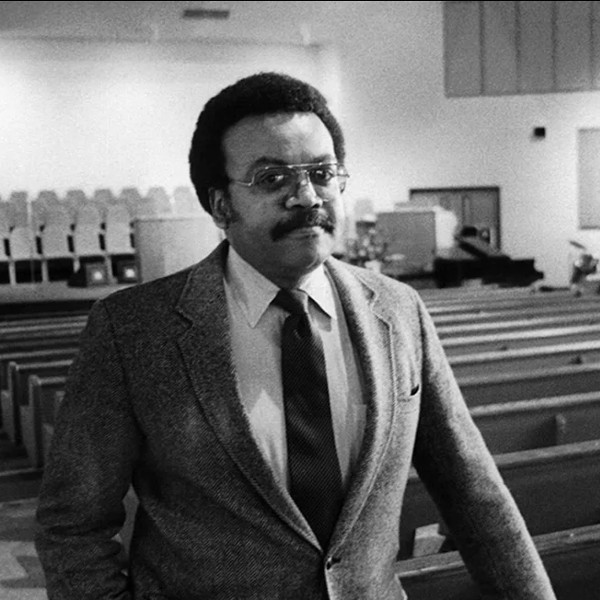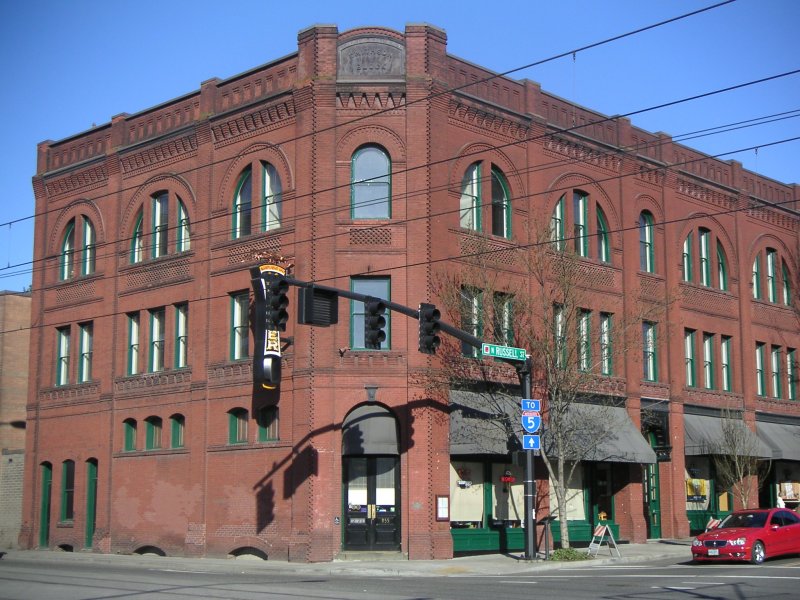
Back in 2006 Cascadia Behavioral Healthcare moved the Garlington Center into Eliot Neighborhood at 3034 NE Martin Luther King Jr. Blvd. Soon they hope to transform the property with a new mixed use building that will include existing services as well as affordable housing.
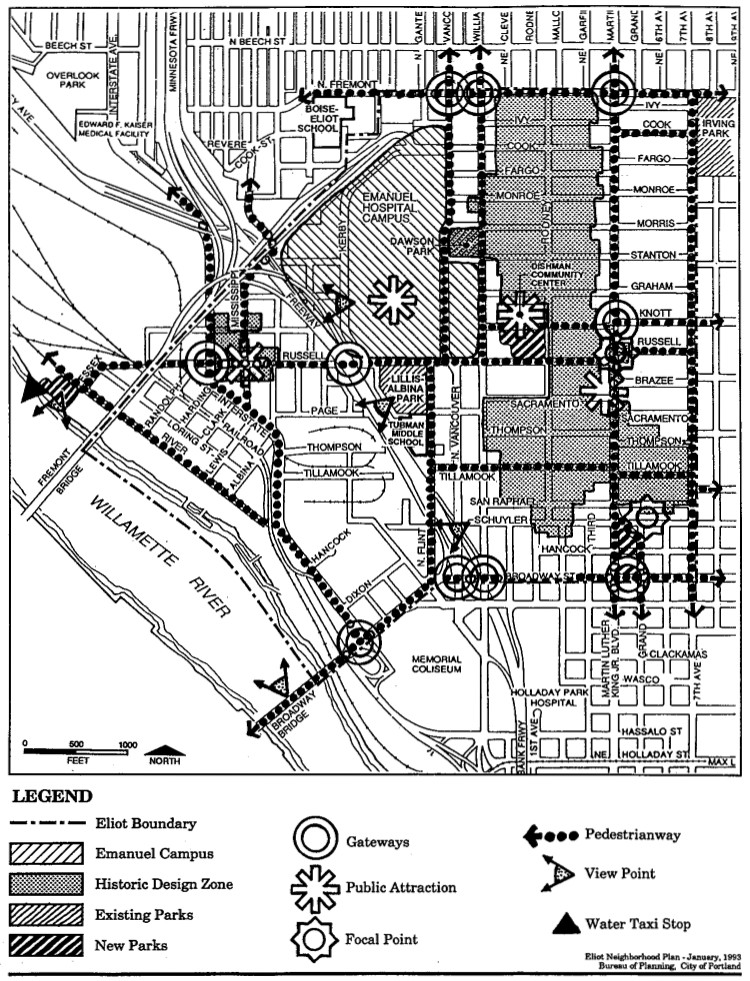
Urban Design Concept Plan from 1993 Eliot Plan p.40
The Eliot Neighborhood Plan is going to be updated after 22 years. Last time it was completed, Eliot was scheduled to get a water taxi stop. What does the future hold for our piece of shoreline on the Willamette River now?
It’s wonderful to learn about the history of our Eliot neighborhood. Here are ways you can find out more about Eliot, its founders, its architecture and some of its elders.
The Albina Building, Larrabee and Albina, 1927. Portland Archives A2009-009.2471.
This building on the corner of Larrabee (Interstate) and Albina was originally built as a hotel in the late 1890’s or early 1900’s. The building looks like it was a triangle, however it was actually shaped like a “V”. At the top of the building, over the corner entrance, are the words “The Albina”. It appears there is additional text above in the shadows, but it is unreadable – or perhaps it is ornamentation. In 1929, The Albina was home to the “Ideal Cafeteria” and the “Baxter Apartments”.
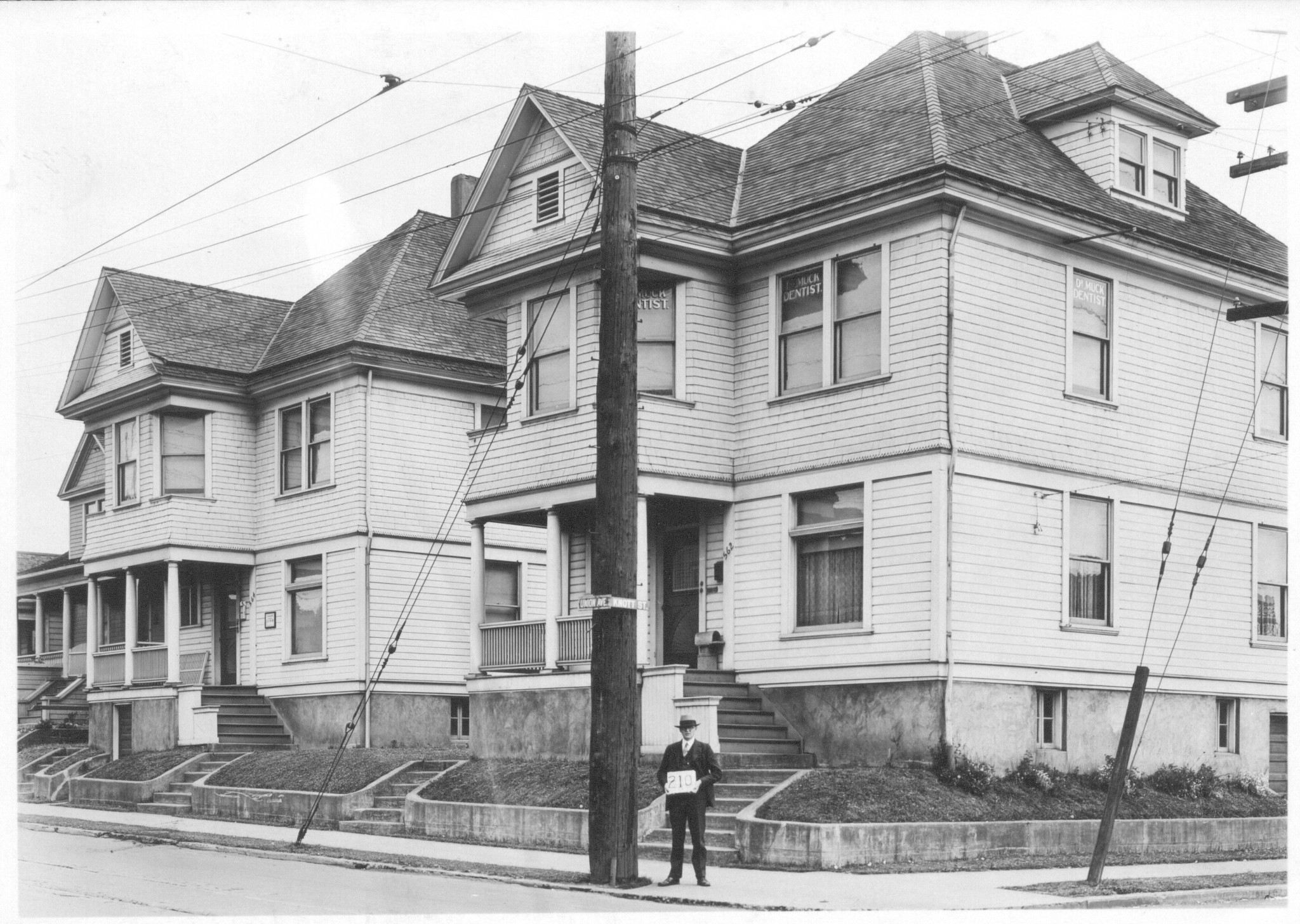
Union and Knott 1929. Portland Archives A2009-009.1053.
These twin houses on the corner of Union and Knott were built in 1900. By 1929 Union had already become a busy street and the houses had started the transition from residential to commercial. “Dr Muck Dentist” occupied the second floor of the house on the corner. Over the course of his dental career Dr Earl C Muck had his office in different nearby locations on Union.
There are two 125-year-old houses in Eliot that are going to be demolished if the neighborhood doesn’t rally to save them. The best option would be to purchase them from the developer who owns them, Guy Bryant of GPB Construction, or failing that, to convince him not to tear them down to build his ultramodern 40-foot-tall rowhouses that, needless to say, don’t fit in to the neighborhood. The houses were built at the time the City of Albina was its own city.
Historic Homes & Buildings: The John Antonio House The Second Oldest House in Eliot
The John Antonio House on NE Tillamook with snow in January 2007
There is one small old house tucked away inside our architecturally diverse neighborhood that could escape being noticed during a walk. It is not a fancy Victorian-era house loaded with gingerbread but a simple cottage with a shallow bay window in front. The Antonio Cottage can be found in the middle of the block on the south aide of NE Tillamook between Martin Luther King Jr. Blvd. and NE 7th Avenue at number 528. The house sits on one of the earliest blocks developed when the “Townsite of Albina” was laid out in 1873. Research has revealed that this is the second oldest structure known in our neighborhood.
The Architectural Heritage Center is planning a Historic Albina Walking Tour that will take place mostly in Eliot Neighborhood on Sunday October 20th at 4:00 pm.
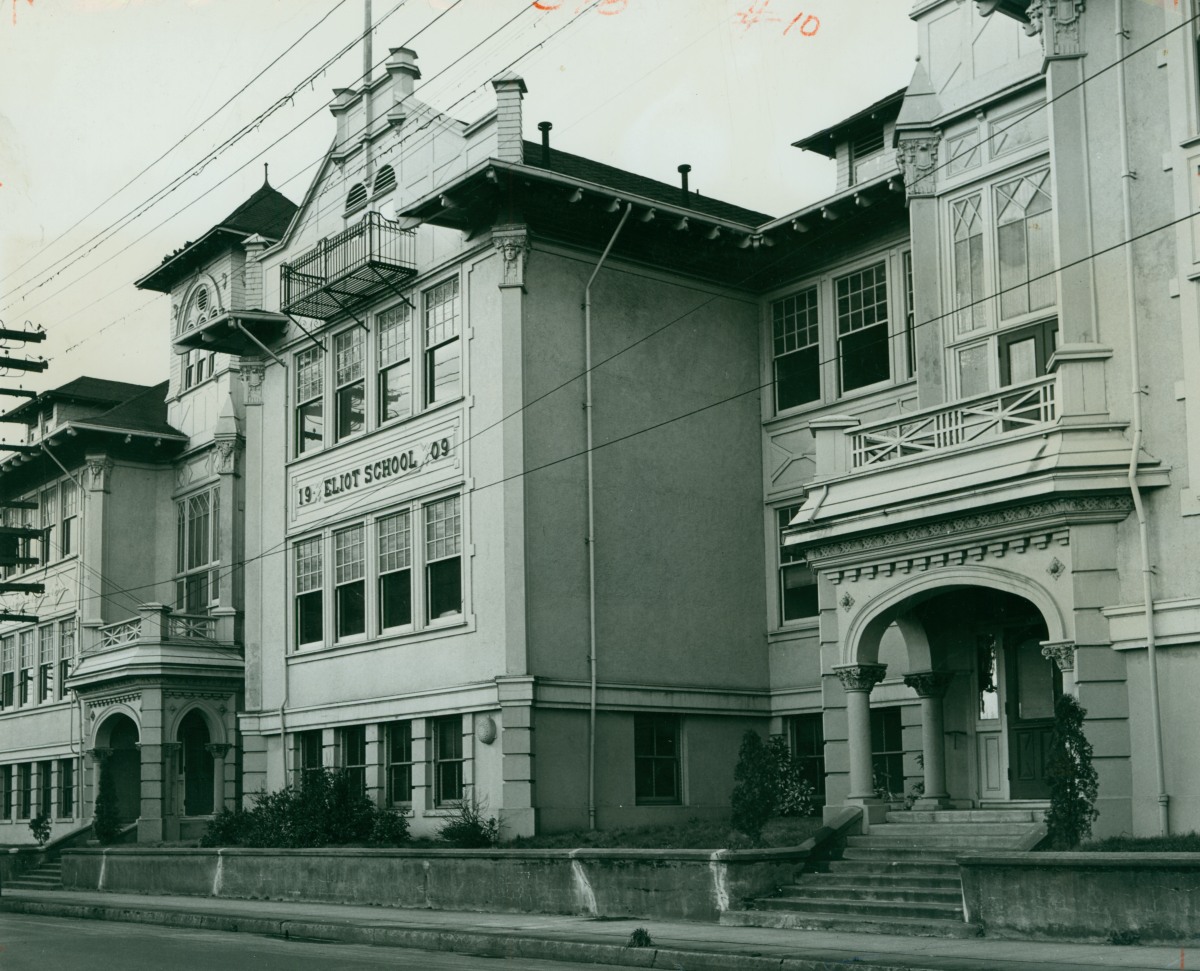
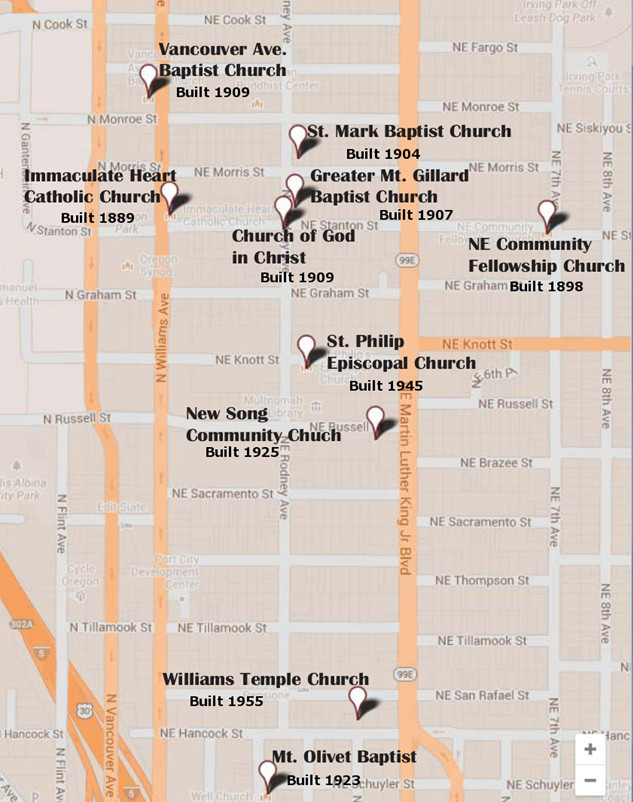
A number of churches were built in the neighborhood around the turn of the 20th century
The churches of Eliot are a rich historic and cultural asset to the neighborhood. There are at least ten churches in the neighborhood today and most were built in the early 1900’s with Immaculate Heart dating to 1889.
Another historic home in the Boise neighborhood nearby Eliot at 3605 N Albina is slated for demolition. A developer from Lake Oswego intends to replace this classic vintage home with a bland modern 2-family structure with a property split down the middle of the lot. This Queen Anne styled home is not a fancy Victorian era mansion but a decorative cottage, typical for a middle-classed resident in 1890. At the time this house was built, the Eliot, Boise, and King neighborhoods were within the limits of the City of Albina, consolidated by the City of Portland one year later.
Houses, houses, houses! In 1955 houses dominated the landscape in Eliot. This view of Eliot from above was taken as part of a larger photo of the downtown area. The image shows the neighborhood before the massive changes that came in the 60’s and 70’s. Memorial Coliseum had not yet been built, I-5 had not yet tore through the neighborhood, the Emanual Hospital campus had not yet sprawled into the neighborhood and Fremont was just a street (not quite in the picture) and not also a bridge. Also worth noticing, Lower Albina still had homes, Albina park was square, the grid pattern covered most of the area, and the now vacant lots around Russell near Williams and Vancouver had buildings.
We live and work on them. We walk, bicycle, and drive on them, but how many of us know the history behind the streets of Eliot? Here, with help from the book Portland Names and Neighborhoods: Their Historical Origins, by Eugene E Snyder (Binford and Mort, 1979) are the stories of some of the neighborhood’s more well known streets.
Q1: What still in use structure on MLK had a bit part in a 1993 sleeper hit? What was the building? What was the movie? Bonus: What two word line (arguably one of the best in the movie) was uttered by an extra in that scene?
Q2: What used to be at the site of the Nike outlet store? What happened to it?
Q3: What is the name of the park adjoining Tubman School, and why is it hyphenated?
Allies of Eliot, a group of eight PSU community development students, has produced a historic walking tour of Eliot based on a series of interviews conducted by the Eliot Oral Histories Project and on community outreach conducted for the walking tour. The tour is self-guided and consists of an informational booklet with historical photos, and corresponding audio tracks taken from the interviews. Booklets and audio players will be available for checkout from Dishman Community Center, where the tour begins and ends. A condensed brochure version of the booklet and audio mp3s will be available for free download from the project website this summer.
The history of the Eliot Neighborhood has been something that has brought culture and identity to it’s residents for a long time. It is something of controversy, life, and community. However, the neighborhood is changing. In order to keep the legacy of Eliot alive, Laurie Simpson and Arlie Sommer have teamed up with a group of Community Development undergraduate students from Portland State University to create an oral history project for the Eliot Neighborhood. Fusing together informational interviews of long term residents in Eliot and historical research, the students will create a historical walking tour of the neighborhood, bringing out oral narratives to show the changes and the history that exists here.